
Updated 2026-07-05 · 7 min read
UL 3700 explained
What UL 3700 means for plug-in solar buyers, what it tests, what it does not prove, and how to read certification claims.
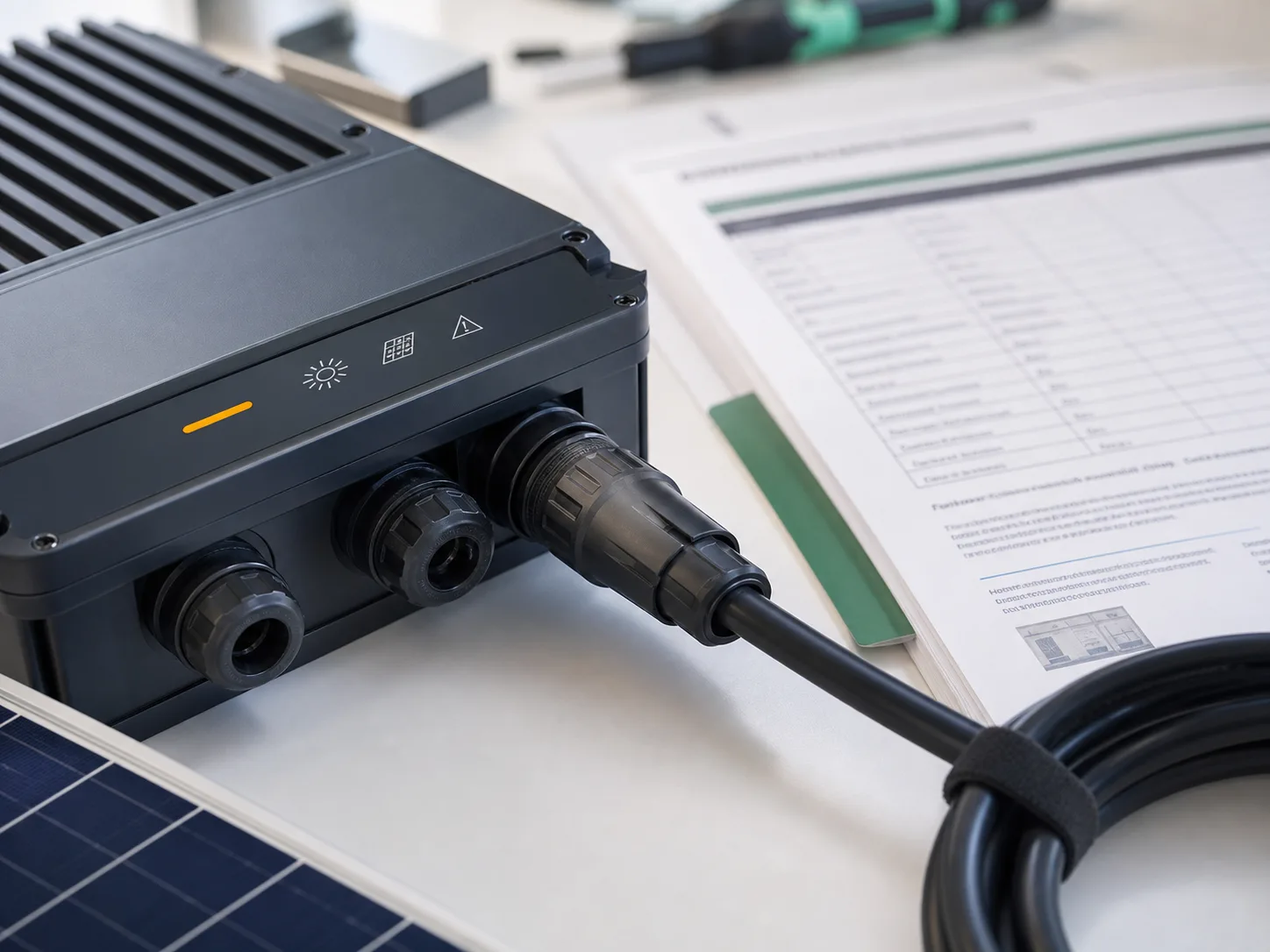
Why a new standard was needed
Solar panels and inverters are not new. What is unusual is packaging a small grid-interactive solar system as something a consumer can plug into a home. That raises different questions than rooftop solar or ordinary appliances.
UL Solutions launched a U.S. testing and certification framework based on UL 3700 in early 2026. The point is to give manufacturers, regulators, utilities, and consumers a clearer safety baseline for plug-in solar systems.
What UL 3700 is trying to prevent
The main concerns are shock, fire, unsafe installation, circuit overload, and electricity flowing where it should not. A plug-in system needs to handle power moving from the panels into the home's wiring while staying coordinated with the grid.
That is why a plug-in solar product is not just another appliance. Ordinary appliances consume power; plug-in solar supplies it. The equipment, labels, instructions, connectors, and protections all matter.
Complete system vs. components
This is the buyer trap. A panel may have one certification, an inverter may have another, and a cable may look sturdy. That still does not prove the finished kit was tested as a plug-in solar system.
When a seller mentions UL, ETL, CSA, IEEE, NEC, UL 1741, or other standards, slow down and ask what exactly was certified. You want the exact complete system, for the exact use case, documented by a recognized testing lab.
Who can certify
UL is a familiar name, but it is not the only testing organization. In the United States, OSHA recognizes multiple Nationally Recognized Testing Laboratories that can test and certify products to applicable safety standards.
The logo on a product page is less important than the certificate behind it. A serious product should let you identify the model, standard, certifier, and scope of the listing.
What UL 3700 does not answer
Certification does not tell you whether your state allows plug-in solar, whether your utility requires notice, whether your lease permits balcony equipment, or whether your railing can hold the panel.
Think of UL 3700 as one critical gate. You still need the legal gate, the utility gate, the building-permission gate, the mounting gate, and the economics gate before buying.
FAQ
Does UL 3700 mean plug-in solar is legal everywhere?
No. UL 3700 is a safety framework. State law, utility rules, local code, landlord rules, and product availability still matter.
Is UL 1741 the same as UL 3700?
No. UL 1741 is commonly associated with inverters and grid-interactive equipment. UL 3700 is the plug-in solar system framework. A UL 1741 inverter claim does not automatically certify the whole plug-in kit.
How can I verify certification?
Ask for the exact model listing, the certifying lab, the standard used, and whether the listing covers the complete plug-in solar system rather than individual components.
Related guides
What is plug-in solar?
A plain-English guide to balcony and plug-in solar: what it is, what's in a kit, who it helps, and what it doesn't replace.
6 min readHow does plug-in solar work?
Follow the electricity from panel to plug to your home — and understand why the outlet connection is the part that needs care.
7 min readIs plug-in solar safe?
What can go wrong, what the new U.S. safety standard is meant to prevent, and the checks that separate a safe kit from a risky one.
Sources
- UL Solutions Debuts Testing and Certification Framework for Safer Plug-In Solar Across the United StatesUL Solutions; accessed 2026-07-02
- UL 3700 Outline of Investigation for Interactive Plug-In Photovoltaic Equipment and SystemsUL Standards & Engagement; accessed 2026-07-02
- Current List of NRTLsOccupational Safety and Health Administration; accessed 2026-07-02
- IEEE 1547-2018IEEE Standards Association; accessed 2026-07-02
- What States Need to Know About Plug-In SolarClean Energy States Alliance; accessed 2026-07-02