
FAQ
Your plug-in solar questions, answered.
Straight answers on what plug-in solar is, whether it’s legal where you live, what it saves, how to stay safe, and the product claims worth a second look.
What exactly is plug-in solar?
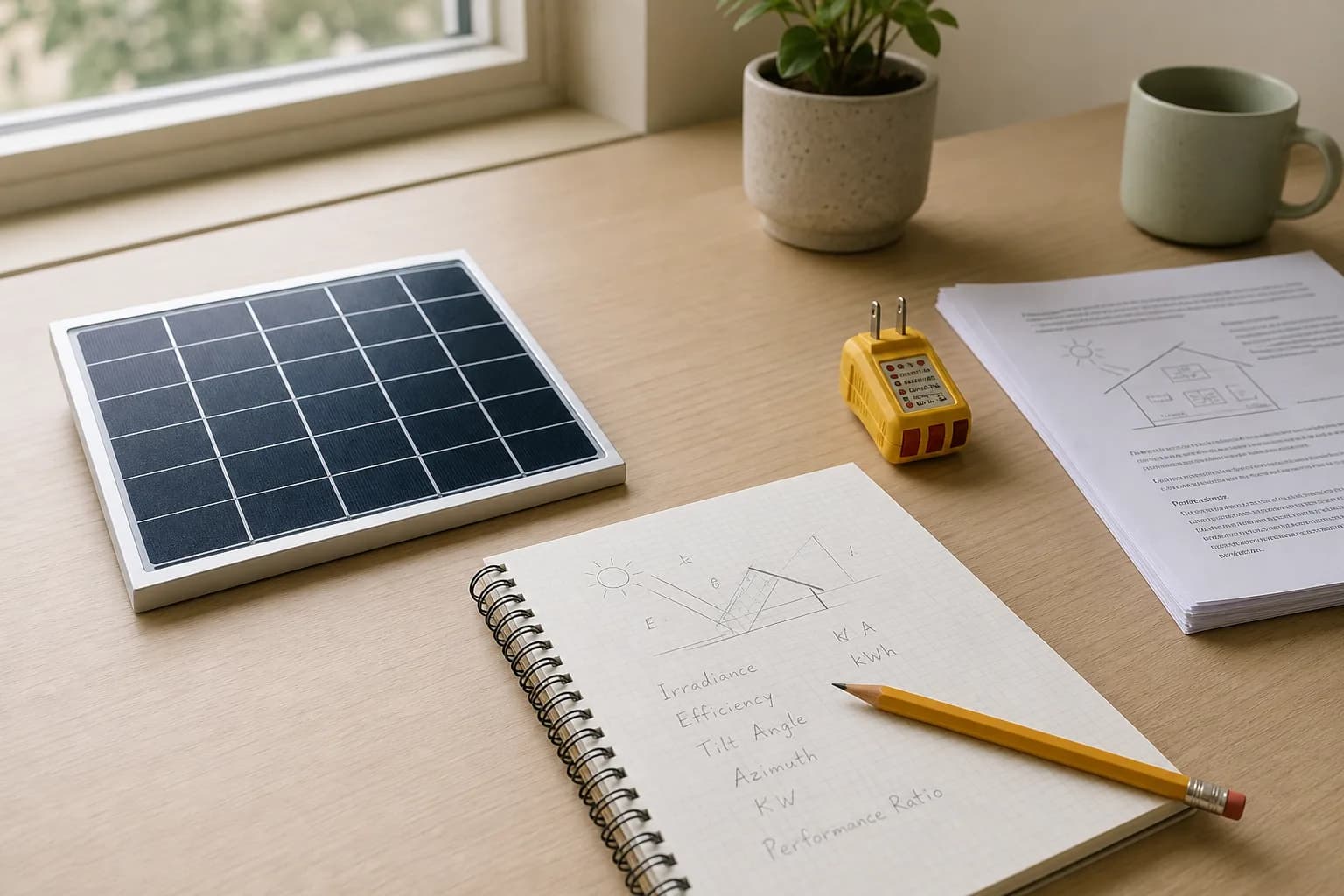
It's a small set of solar panels — usually one to four — that you connect to your home with a plug instead of wiring them permanently into the roof. While the sun shines, they feed electricity into your home and lower the amount you buy from the utility. It's also called balcony solar or plug-and-play solar.
Is plug-in solar legal in the United States?
There's no single national yes-or-no. It depends on your state, your local building and electrical codes, your utility, and whether a certified product is available. Some states have passed specific plug-in solar laws, many more have bills in progress, and some have no rules yet. Check your state's page for where it stands.
How much money can it actually save me?
A typical kit saves roughly $100 to $250 a year, but it truly depends on your situation. The biggest factors are your local electricity price, how sunny and shade-free your spot is, the kit's size, and how much electricity your home uses during daylight. Our calculator lets you plug in your own numbers.
Can it power my refrigerator?
Not in the way you might picture. The panels don't power one specific appliance — they add electricity to your home's wiring, and whatever is running uses it. Over a day, that can offset part of what your fridge and other always-on devices consume, which lowers your bill. It just isn't 'assigned' to the fridge.
Will it keep my power on during a blackout?
Usually no, and that's by design. Standard systems are built to shut off the instant the grid goes down, so they can't put a dangerous voltage on lines that utility crews think are dead. Only products with a specific, separately certified backup mode can power devices during an outage — don't assume an ordinary kit will.
Will my electric meter run backward and pay me?
Don't count on it. Many plug-in solar laws are about offsetting the electricity you use on-site, not paying you for extra power you send back. If you produce more than your home is using, that surplus may earn nothing, be blocked by the system, or charge a battery — depending on your state and utility. The savings come mainly from electricity you use yourself.
Do I need an electrician to install it?
Often no — many kits are designed for you to set up yourself, and some state laws specifically allow self-installation. But a few states or buildings require an electrician, a dedicated outlet, or a utility notice first. Your state page and the product's instructions are the place to confirm.
Can my landlord or HOA say no?
Possibly. Even where state law allows plug-in solar, renters and members of a homeowners association (HOA) may still run into building rules, appearance rules, fire-access requirements, insurance conditions, or approval steps — unless a specific law overrides them. It's worth getting written permission before you mount anything.
Can I just use a regular extension cord?
Treat that with real caution. An extension cord is not a proper permanent connection. Follow the kit's instructions exactly, and never run cables through windows or doors, across walkways, or near standing water, sharp edges, or heat. If a product relies on an ordinary extension cord through a window, consider that a red flag.
How do I know a kit is safe?
Look for a certification covering the complete system for plug-in solar use — not just a certified panel or inverter. The U.S. standard written for this is UL 3700, tested by an independent lab like UL. A certified system, installed on a suitable circuit and a sturdy mount per the instructions, is designed to handle the shock, overload, and backfeed risks. Our safety guide explains what to look for.
A product says its inverter is UL listed. Isn't that enough?
Not by itself. A listed inverter means that one part passed testing. Plug-in solar has whole-system risks, so you want certification of the finished system for plug-in use. Be wary of phrases like 'UL components' or 'designed to UL standards' — those aren't the same as a certified complete system.
Is a battery worth adding?
It can be, but weigh it carefully. A battery stores midday sun so you can use it in the evening, which increases your savings, and some batteries add limited backup power. But it also adds cost, some energy loss, and complexity. It only provides outage backup if the product is specifically designed and certified for that.
How is this different from a portable power station or generator?
Plug-in solar makes electricity to lower your everyday bill. A portable power station is a big battery for backup during outages, and a generator burns fuel for backup power. If you want a lower monthly bill, plug-in solar fits; if you want blackout backup, a power station or generator is the tool. Our comparison guide breaks it down.
Does the savings calculator guarantee what I'll save?
No — it's an estimate, and it's honest about that. Your real savings depend on your electricity rate, sunlight, shade, how much you use during the day, the equipment cost, and your local rules. That's exactly why every input is adjustable. Use it for planning, not as a promise.
My state has a pending bill. Can I buy now?
Treat a pending bill — or one awaiting the governor — as a proposal, not a green light. It might pass, change, fail, or be vetoed. Wait for an enacted law's applicable effective date and for certified products to be available before assuming you're clear to install.
Is anything on this site legal advice?
No. We gather public sources and explain them in plain English to help you get oriented. Laws, utility rules, and products change, so always confirm the current details for your state and consult a qualified electrician or advisor before you install.