
Updated 2026-07-05 · 6 min read
Plug-in solar vs. rooftop solar
A plain-English comparison of plug-in solar and rooftop solar: cost, installation, savings, renters, backup power, permits, and trade-offs.
The core difference
Rooftop solar is a permanent power plant on your home. Panels are mounted to the roof, wired through dedicated electrical equipment, inspected, and connected through a formal utility process. It can cover a large share of a home's annual electricity use.
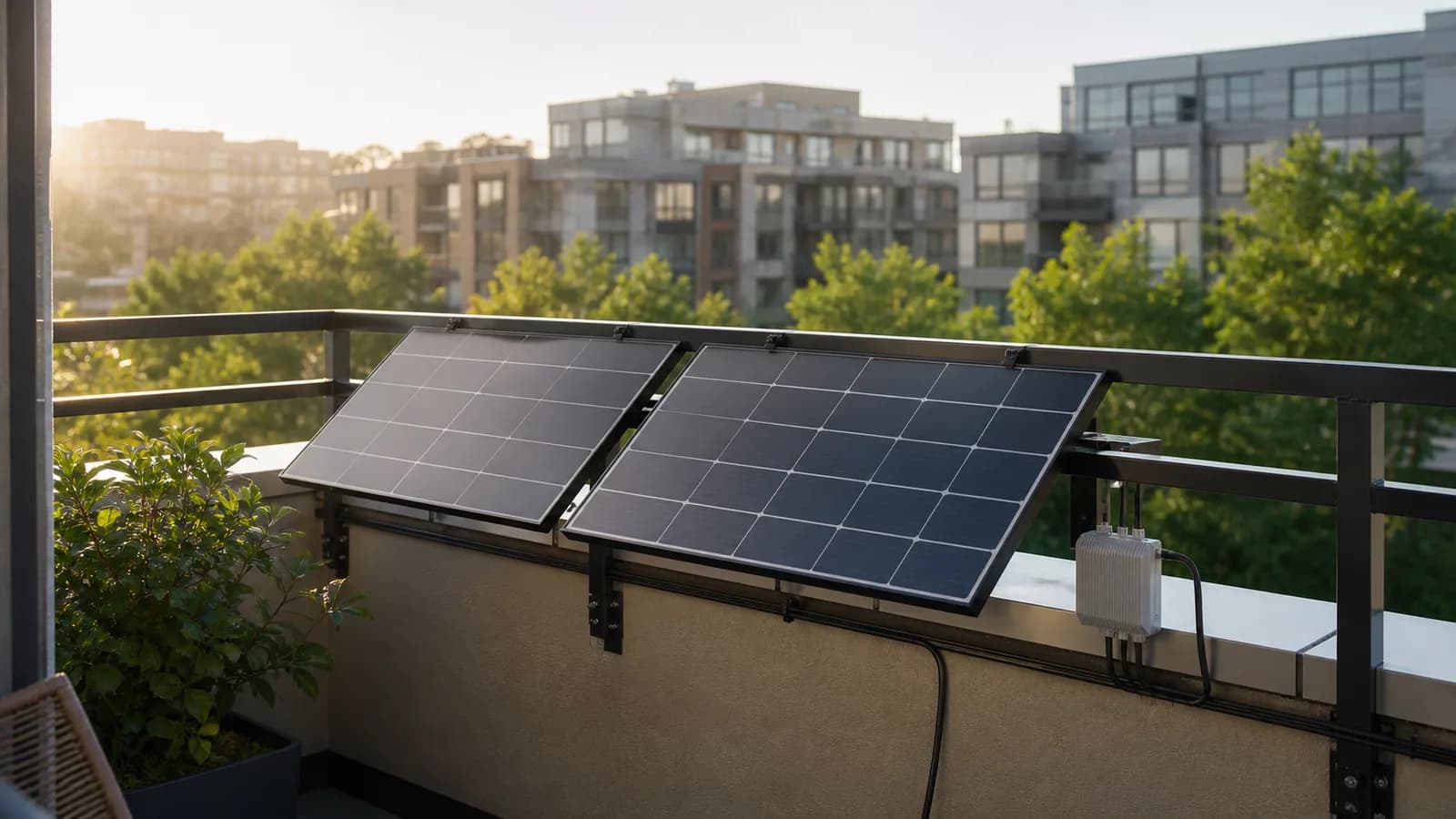
Plug-in solar is a small system that connects through a plug where rules allow it. It is designed to offset some electricity your home is already using during daylight. Think bill trimming, not whole-home replacement.
Cost and commitment
Rooftop solar often costs many thousands of dollars because it includes design, permitting, labor, racking, wiring, inspection, and utility coordination. That can be worthwhile for homeowners with good roofs and long time horizons.
Plug-in solar aims to cut those soft costs by staying small and simple. The trade-off is scale: a compact kit cannot match the output of a full roof, and legal uncertainty can erase the convenience if your state or utility has not caught up.
Who each option fits
Rooftop solar fits owners with suitable roofs, good sun, enough tax appetite or financing options, and plans to stay put. It is a home-improvement decision as much as an energy decision.
Plug-in solar fits people who want a smaller step: renters, apartment dwellers, homeowners with shaded or aging roofs, or anyone testing whether a modest solar investment makes sense. But it still needs a safe place to mount and a legal path to connect.
Savings expectations
A rooftop system can offset a large part of a household's annual electricity use. A plug-in kit usually offsets a slice of daytime use: refrigerator, Wi-Fi, fans, standby loads, laptops, and part of cooling demand.
That smaller scale is not a flaw; it is the category. The right question is whether the kit's cost, lifespan, and realistic usable production create a payback that feels worthwhile.
Backup power
Neither option automatically keeps your power on during a blackout. Standard grid-tied systems shut down when the grid fails to protect utility workers.
Backup requires equipment specifically designed and certified for that job, usually with batteries and transfer or isolation hardware. Do not buy either rooftop or plug-in solar assuming blackout power unless the product and installation explicitly support it.
FAQ
Is plug-in solar cheaper than rooftop solar?
Usually yes upfront, because it is much smaller and can avoid major installation costs where rules allow. It also produces much less electricity.
Can plug-in solar replace rooftop solar?
No for most homes. Plug-in solar can trim a bill; rooftop solar can offset a large share of annual use when the roof and economics work.
Which is better for renters?
Plug-in solar is usually the only realistic on-site option for renters, but it still depends on state rules, lease permission, safe mounting, and certification.
Related guides
What is plug-in solar?
A plain-English guide to balcony and plug-in solar: what it is, what's in a kit, who it helps, and what it doesn't replace.
6 min readHow does plug-in solar work?
Follow the electricity from panel to plug to your home — and understand why the outlet connection is the part that needs care.
7 min readIs plug-in solar safe?
What can go wrong, what the new U.S. safety standard is meant to prevent, and the checks that separate a safe kit from a risky one.
Sources
- What to know about plug-in solarSolar United Neighbors; accessed 2026-07-02
- How States Can Unlock Affordable Plug-In SolarWorld Resources Institute; accessed 2026-07-02
- What States Need to Know About Plug-In SolarClean Energy States Alliance; accessed 2026-07-02
- The Rise of Plug-In Solar: How States Can Reduce Costs and Streamline Clean Energy AdoptionNational Caucus of Environmental Legislators; accessed 2026-07-02
- Electricity explained: Use of electricity in homesU.S. Energy Information Administration; accessed 2026-07-02