
Updated 2026-07-05 · 8 min read
Best plug-in solar kits in the U.S.
A cautious shortlist framework for comparing plug-in solar kits: who each option may fit, what to verify, and why certification matters more than hype.
How to read this shortlist
This is not an endorsement list. The U.S. plug-in solar market is still young, product claims are changing quickly, and state rules are not uniform. Use the names below as market landmarks: examples of the kinds of kits and ecosystems shoppers are likely to see.
The order is deliberately practical rather than promotional. Start with whether your state allows plug-in solar, then whether the product is certified as a complete plug-in system, then whether it physically fits your home, and only then compare price, watts, storage, apps, and warranties.
Storage-first systems
EcoFlow's STREAM line is a polished storage-first example. Its appeal is simple: panels can charge a battery and the battery can help shift solar energy into the evening, when many homes use more power. That can be more useful than exporting surplus midday power for little or no credit.
The U.S. product page currently warns that plug-in solar installation is permitted in Utah and tells buyers to check local regulations before purchasing. That warning is useful, because it keeps the legal check ahead of the purchase decision.
Complete-kit sellers
CraftStrom is an example of a seller packaging panels, inverters, power monitoring, mounting, cables, and app controls into a plug-and-play kit. That complete-kit framing is helpful because plug-in solar should be evaluated as a system, not as a pile of parts.
Still, read certification language closely. A page may mention ETL, UL, IEEE, NEC, or component certifications. The buyer question is narrower: is the exact complete system certified for plug-in photovoltaic use in a way your state and utility recognize?
Microinverter ecosystems
APsystems EZ1 is a visible U.S. plug-in microinverter platform. It is marketed for DIY plug-and-play solar on balconies, patios, gardens, and similar spaces, and it is likely to appear inside multiple kits from different sellers.
The important distinction: buying a recognizable microinverter is not the same as buying a fully certified complete kit. If a distributor bundles panels, mounting, cables, and an EZ1, verify the certification and instructions for the finished bundle you are actually buying.
Low-cost plug-in kits
PluggedSolar and similar ecommerce sellers can look attractive because the entry price may be lower than storage-heavy systems. That can make sense if you have a sunny, safe place to mount panels and enough daytime load to use most of the power.
This is also where skepticism matters most. Phrases like UL 1741 inverter, UL components, grid-tie, or standard outlet do not automatically answer the complete-system certification question. Lower cost is only useful if the kit is legal, certified, installable, and sized for the electricity you can actually use.
The shortlist rule
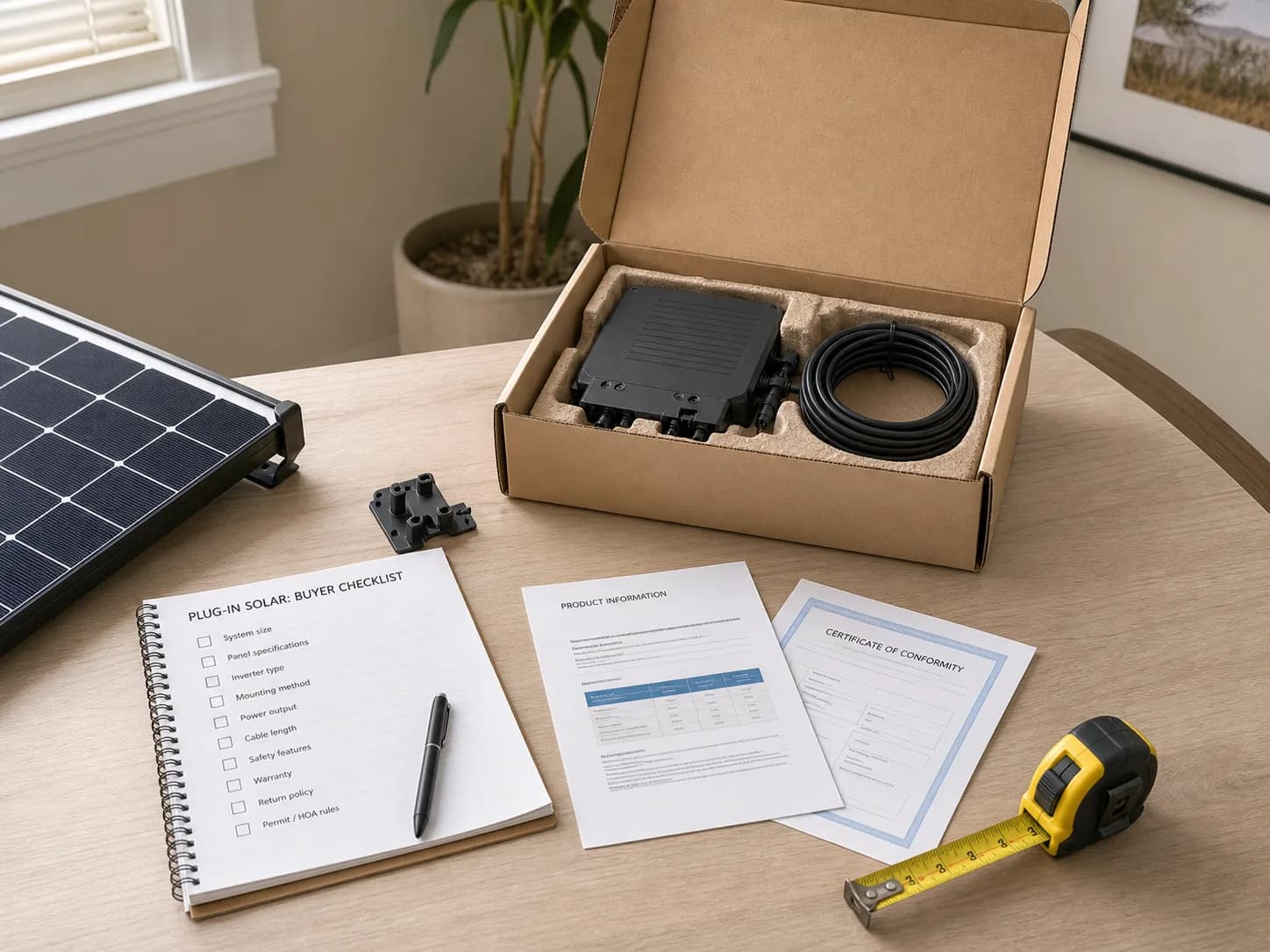
For most shoppers, the best first shortlist is not a brand list. It is a pass-fail checklist: legal where you live, complete-system certification, safe mount, correct outlet and circuit requirements, clear instructions, realistic savings, and a return policy that protects you if one of those checks fails.
Only compare watts and price after the safety and legal checks are done. A cheaper uncertified kit can become the most expensive option if you cannot install it, cannot insure it, or have to remove it.
FAQ
What is the best plug-in solar kit?
The best kit is the one that is allowed where you live, certified as a complete system, physically safe to mount, and sized to the power you can use during the day. There is no universal winner yet.
Should I buy a battery with plug-in solar?
A battery can help if you make more solar power than you use during midday or want limited backup features. It also adds cost, efficiency losses, and complexity, so compare payback carefully.
Is a UL-listed inverter enough?
Not by itself. A listed inverter is good, but plug-in solar creates whole-system questions around plugs, wiring, backfeed, labeling, and installation. Look for certification of the complete system.
Related guides
What is plug-in solar?
A plain-English guide to balcony and plug-in solar: what it is, what's in a kit, who it helps, and what it doesn't replace.
6 min readHow does plug-in solar work?
Follow the electricity from panel to plug to your home — and understand why the outlet connection is the part that needs care.
7 min readIs plug-in solar safe?
What can go wrong, what the new U.S. safety standard is meant to prevent, and the checks that separate a safe kit from a risky one.
Sources
- STREAM Series Plug-and-Play Home Solar SystemEcoFlow; accessed 2026-07-05
- 1200 Watt Plug&Play SolarCraftStrom; accessed 2026-07-05
- EZ1 - ConsumersAPsystems USA; accessed 2026-07-05
- Plug and Play SolarPluggedSolar; accessed 2026-07-05
- Plug-In Solar Panels for HomeBright Saver; accessed 2026-07-05
- UL Solutions Debuts Testing and Certification Framework for Safer Plug-In Solar Across the United StatesUL Solutions; accessed 2026-07-02
- UL 3700 Outline of Investigation for Interactive Plug-In Photovoltaic Equipment and SystemsUL Standards & Engagement; accessed 2026-07-02