
Updated 2026-07-05 · 7 min read
Balcony solar for renters
How renters should think about plug-in solar: lease permission, balcony mounting, state rules, utility checks, savings, and what to ask before buying.
Why renters are interested
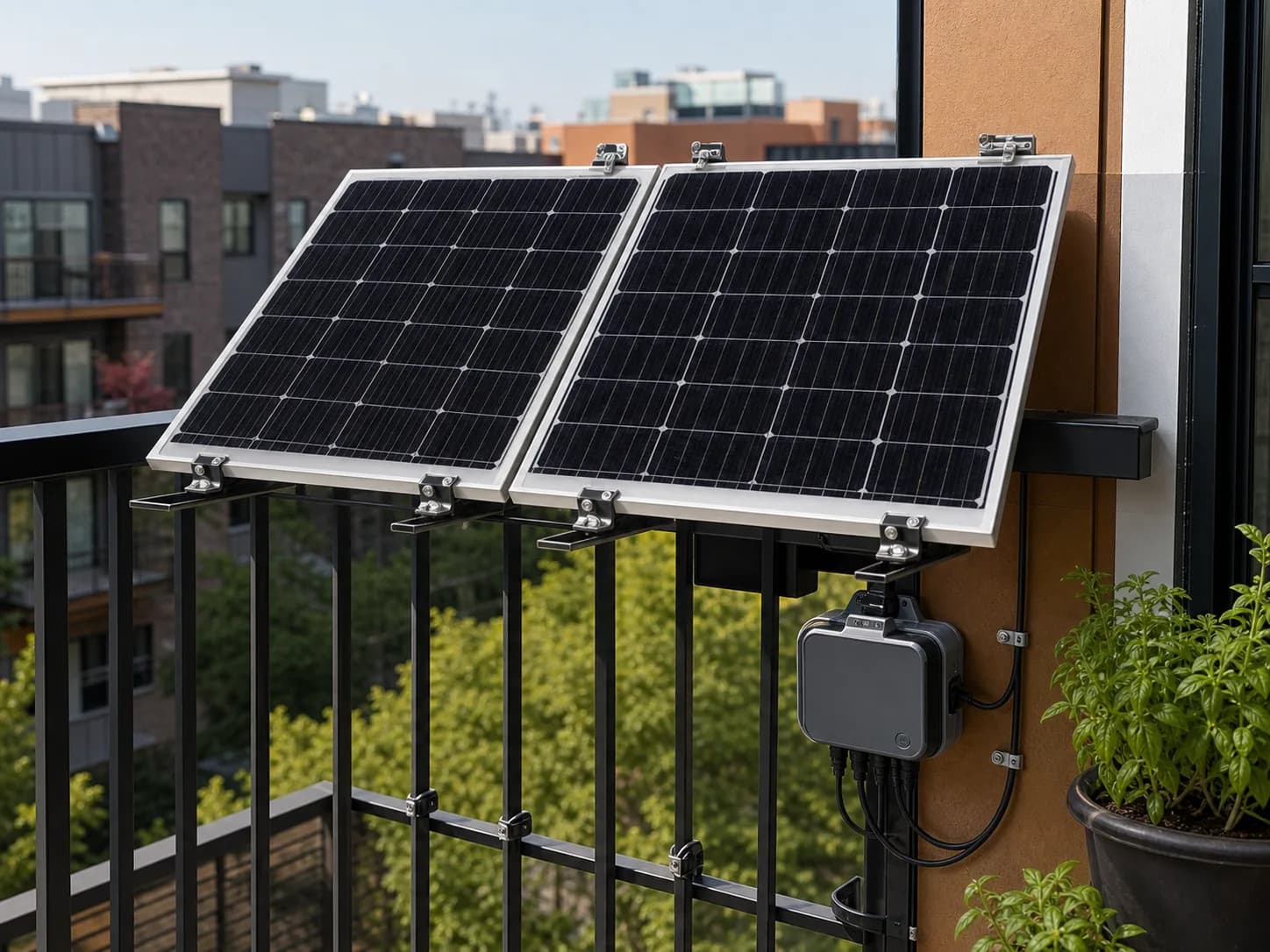
Rooftop solar usually assumes you own the roof, plan to stay for years, and can approve a permanent installation. Renters often have none of those things. Plug-in solar changes the shape of the decision because the system can be smaller, movable, and installed without roof work in places where rules allow it.
That is why policy groups describe plug-in solar as an access tool, not just a gadget. It can bring some bill savings to apartments, condos, patios, and yards that traditional rooftop solar would skip.
The renter permission stack
Start with your state, but do not stop there. A state law may allow plug-in solar in general while your lease, building rules, fire code, utility, or homeowners association still imposes conditions. Ask in writing before attaching anything to a balcony, railing, wall, fence, or shared structure.
The safest question is specific: can I mount this exact certified plug-in solar system in this exact location, route this cable this way, and connect it according to the manufacturer's instructions? Vague approval for solar may not cover the details that matter.
Balcony mounting is the hard part
A solar panel is not just a poster in the sun. Wind can pull on it, vibration can loosen hardware, and a falling panel can hurt someone below. Electrical certification does not prove your balcony railing can hold the load.
Before buying, check the mount, railing strength, wind exposure, cable path, water exposure, and whether anything below the balcony could be hit. If you cannot mount it safely and reversibly, the kit is not a good fit for that rental.
How renters should size a kit
Because renters often have limited sunny space, bigger is not always better. A one- or two-panel kit may match a balcony better than a larger system that is hard to mount or produces power you cannot use.
Focus on daytime loads: refrigerator, Wi-Fi, laptop, fans, standby electronics, and daytime air conditioning. If your apartment is empty all day and export earns nothing, a battery or a smaller kit may make more sense than maximum watts.
The move-out question
A renter-friendly kit should be removable without damage. Before buying, think through storage, transport, lease-end removal, wall or railing marks, and whether the product warranty survives a move.
If the installation depends on permanent drilling, a dedicated outlet, or building electrical changes, it may still be possible, but it is no longer the simple renter scenario most people mean by balcony solar.
FAQ
Can renters use plug-in solar?
Sometimes. Renters need state permission, building or landlord approval, safe mounting, a certified product, and compliance with utility and local code requirements.
Can my landlord ban balcony solar?
Possibly, unless a specific state or local law limits that restriction. Even then, reasonable safety, appearance, and mounting rules may still apply.
Is balcony solar worth it for an apartment?
It can be worth it if you have good sun, safe mounting, legal permission, and enough daytime use. The savings are usually modest, so avoid buying until those checks are clear.
Related guides
What is plug-in solar?
A plain-English guide to balcony and plug-in solar: what it is, what's in a kit, who it helps, and what it doesn't replace.
6 min readHow does plug-in solar work?
Follow the electricity from panel to plug to your home — and understand why the outlet connection is the part that needs care.
7 min readIs plug-in solar safe?
What can go wrong, what the new U.S. safety standard is meant to prevent, and the checks that separate a safe kit from a risky one.
Sources
- How States Can Unlock Affordable Plug-In SolarWorld Resources Institute; accessed 2026-07-02
- The Rise of Plug-In Solar: How States Can Reduce Costs and Streamline Clean Energy AdoptionNational Caucus of Environmental Legislators; accessed 2026-07-02
- What States Need to Know About Plug-In SolarClean Energy States Alliance; accessed 2026-07-02
- What to know about plug-in solarSolar United Neighbors; accessed 2026-07-02
- UL Solutions Debuts Testing and Certification Framework for Safer Plug-In Solar Across the United StatesUL Solutions; accessed 2026-07-02